
Why People Choose Used ASIC Miners
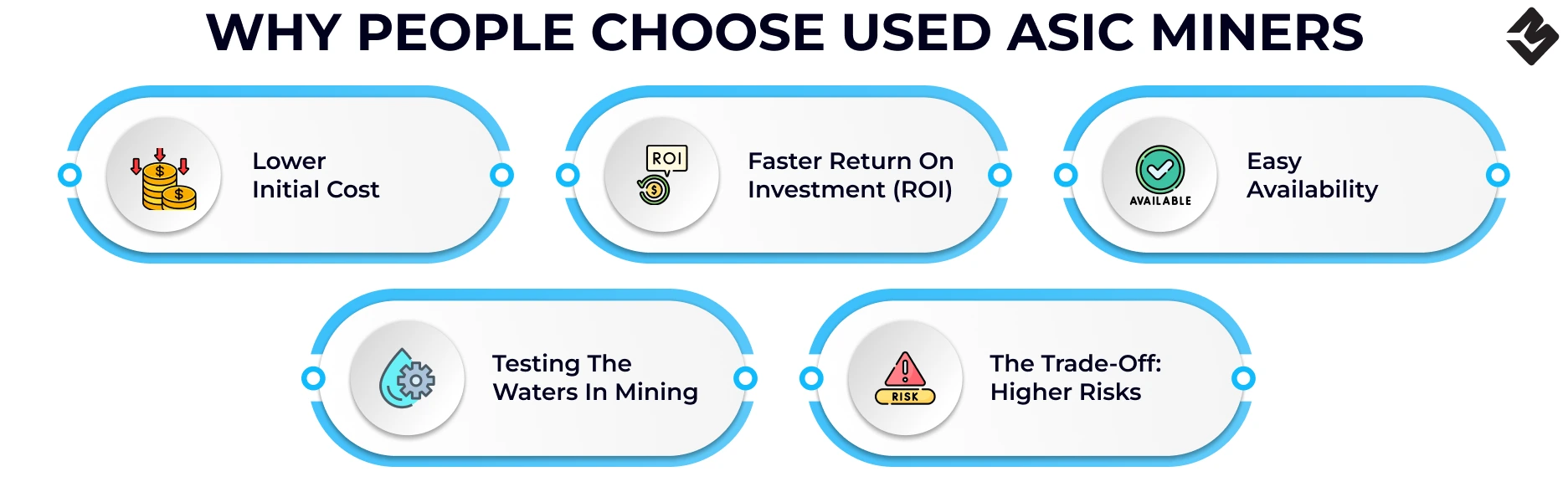
1. Lower Initial Cost
One of the main reasons why miners prefer secondhand ASIC hardware is the price. A new model can cost as much as several thousand dollars, and thus, it is out of reach for many people.
However, used equipment is usually significantly cheaper – sometimes even at half the price of new ones. Thus, for beginners or small miners, this simply means that mining becomes more achievable without the need for a large amount of money to be invested.
2. Faster Return on Investment (ROI)
Considering that used mining equipment is lower in price, the payback period can be shorter. For instance, should a used machine come at a price of $800 while the new one costs $2,500, the low-priced machine can become self-sufficient faster despite the fact that it’s less efficient. The above is very relevant in the case of a bitcoin price increase, which is the reason why old mining machines can become profitable in a few days.
3. Easy Availability
Used ASIC miners can often be found more readily in the market. Several miners tend to change their hardware every year, thus providing a consistent flow of used devices for resale. Therefore, launching new mining ventures without having to wait for the latest releases became feasible. Some pre-owned models may be available at wholesale prices.
4. Testing the Waters in Mining
It is a common practice among new miners to purchase used ASICs for “test mining” before making a substantial investment in hardware. In this way, they can get the real picture of the energy consumption, noise, heat, and the mining process. After getting their first-hand experience, they will be able to judge if they should buy a new machine or not.
Example: Antminer S9
The Antminer S9 is a good example of a used miner that is still popular. Despite being an old model, it is pretty affordable and easy to find. A lot of newbies purchase it to get familiar with the mining process before switching to high-performance models such as the Antminer S19 or S21.
5. The Trade-Off: Higher Risks
Of course, buying used goods comes with risks. The machine may have been running nonstop for years, reducing its lifespan. It might also be less energy-efficient, meaning higher electricity bills. Plus, most used machines have no warranty, so repairs and replacements are the buyer’s responsibility.
People choose to use ASIC miners because they are affordable, available, and suitable for testing mining without a heavy investment. However, they require careful checks before purchasing to avoid costly mistakes.
Key Factors to Compare Before Buying
When deciding between a new or used ASIC miner, several important factors should be carefully compared. These will determine whether your machine is profitable and reliable in the long run.

Hashrate: The Power of the Miner
The hashrate tells you how fast a miner can solve puzzles on the blockchain. Higher hashrates give you a better chance of earning rewards. Newer ASICs usually have higher hashrates than older, used ones. For example, a new Antminer S21 delivers much more power than older models like the S9. A stronger hashrate often makes more sense if your electricity costs are high.
Energy Efficiency
Efficiency is just as crucial as hashrate. It measures how much electricity the machine uses for every unit of work. A less efficient used miner may look cheap initially, but your profits shrink if it consumes a lot of power. New miners are designed with better chips that save energy, so many serious miners prefer them.
Noise and Heat Levels
ASIC miners run nonstop, generating noise and heat. This is an essential factor if you plan to mine at home. Older machines often get louder and hotter over time, requiring extra cooling. New miners tend to be quieter and easier to maintain, especially with hydro or immersion cooling support.
Lifespan and Durability
A new ASIC has a longer expected lifespan since it hasn’t been used yet. A used miner may already have years of wear and tear. If you buy used, check how long it has been in operation and whether it has had proper maintenance. This can make a big difference in how long it will keep running.
Cost vs. ROI
Finally, the cost is compared against the expected return on investment (ROI). A new miner costs more but often pays off in the long term because of higher efficiency and longer life. A used miner is cheaper, so ROI might be faster in the short term, but risks like breakdowns or high electricity bills can cut profits.
Budget Planning: Finding the Right Balance Between Cost and ROI
Mining with ASIC devices is definitely not only about buying the latest or the cheapest hardware – you have to really think through your budget. If you have a good budget plan, it helps you stay away from spending more than you have planned, and thus your mining will continue to bring you profit.

Setting Your Mining Budget
The first step is to decide how much money you can invest without putting yourself under financial stress. Remember, buying the miner is only one part of the cost. In addition, if you want to mine, then you will have to buy the electricity, the cooling, the maintenance, and maybe the internet as well. By establishing a definite budget beforehand, you will find it much easier to decide whether you want to buy a new or a used miner.
Calculating Return on Investment (ROI)
ROI means the time it takes for your mining profits to cover the initial cost of the machine.
For example:
- A new ASIC miner costing $3,000 might take 12–18 months to pay itself off.
- Depending on efficiency, a used ASIC miner costing $900 could pay itself off in 6 – 9 months.
Calculating ROI before you buy can help you determine which option best aligns with your goals – short-term gains or long-term stability.
Short-Term vs. Long-Term Thinking
Used miners often look attractive because of their lower price and quicker ROI. Their profitability might have declined earlier as a result of high power consumption or component failure. The new miners are more expensive, but typically they have a longer lifespan, and their higher efficiency gives you the possibility to cut the electricity costs in the long run. Your choice is up to you if you would like to have rapid returns or sustainable profits.
Don’t Forget Hidden Costs
Many beginners focus only on the machine’s price and forget about extra expenses. The expenses for cooling the system, noise reduction, and shipping fees can accumulate. If you bought a used one, you will likely have to change the fans and the power supply. When designing your budget, always account for these secret costs.
Finding the Balance
Firstly, procuring a used mining machine will be a wise option if you are working with a small budget and desire to test the mining process.
But if you are rich and ready to mine for a long time, it will be better to start with a new mining machine.
A budget that is carefully made and a cost comparison that is diligently done can bring you the right configuration that will not only be a perfect match for your financial comfort zone but will also give you profits.
Common Risks with Used ASIC Miners and How to Avoid Them
Buying a used ASIC miner can save money, but it also comes with certain risks. Those risks can eat your profits or even leave you with a useless machine if you’re not careful. Here are the most common risks and how to avoid them.
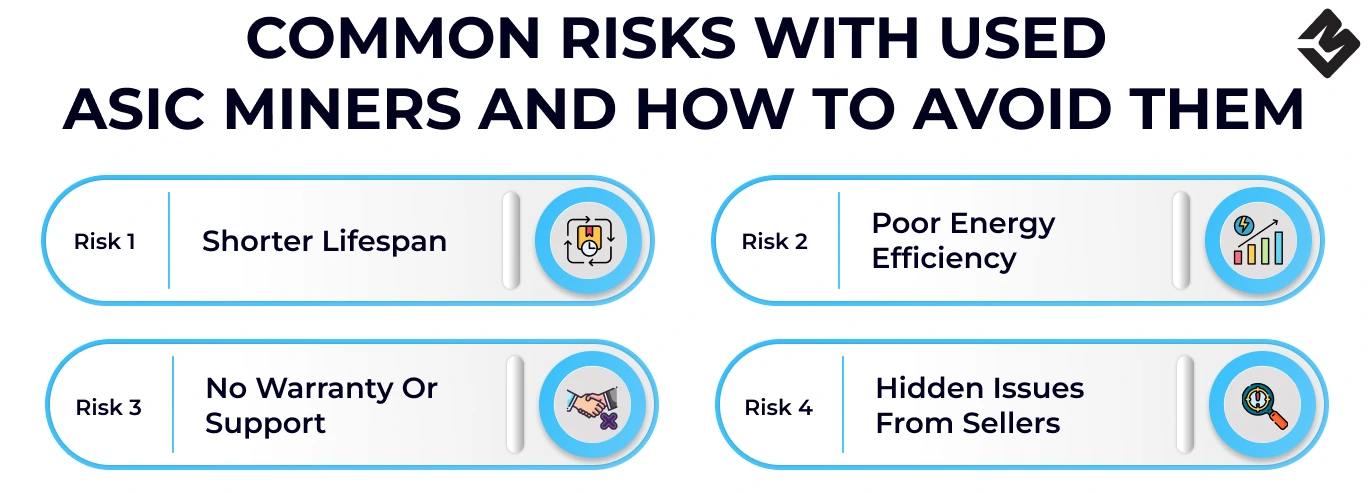
1. Shorter Lifespan
Used ASIC miners may have been running 24/7 for years. This constant use wears down chips, fans, and power supplies, which shortens the machine’s lifespan. Some used miners may only last a few more months after purchase.
How to Avoid It: It is essential to know how long the machine has been in use before going for the purchase. Look out for visible wear signs such as rust, dust build-up, or damaged fans. Getting a product from trustworthy sellers with good reputations will also minimize your risk.
Risk 2: Poor Energy Efficiency
Older machines are usually less energy-efficient. They consume more electricity for the same hashrate, which increases operating costs. High electricity bills can erode your profits even if the machine was cheap.
How to Avoid It: One can calculate the efficiency of the machine before purchasing it, and then compare the result with the electricity rates in their locality. There are occasions where a more expensive machine with a higher level of efficiency pays off in the future.
Risk 3: No Warranty or Support
The majority of heavily utilized mining machines have their warranties expired. If the equipment is out of order, you will be charged for the repair. There are also some vintage models for which spare parts are lacking; thus, the repair will become more complicated and costly.
Prevention: Rely on the well-known models such as Antminer or Whatsminer that have a large stock of spare parts. Additionally, inquire about the vendor’s testing assurance and quick return policy.
Risk 4: Hidden Issues from Sellers
Not every seller is trustworthy. Some can sell mining hardware that has been secretly reduced to overheat, unstable hashrates, or with a faulty power supply. These problems may not be visible right away, but they can be the source of significant troubles in the future.
How to Avoid It: Buy only from verified sellers or marketplaces with buyer protection. Avoid deals that seem “too good to be true.” Test the machine before making a payment.
ASIC miners can still be a good choice, but only if you take the time to check them carefully. By understanding these risks and taking steps to avoid them, you can save money without falling into costly traps.
Essential Checks Before Buying a Used ASIC Miner
Buying a used ASIC miner can be smart, but only if you inspect the machine properly. Skipping these checks may result in poor performance, high costs, or even a dead unit. Here are the most important things to check before finalizing your purchase.
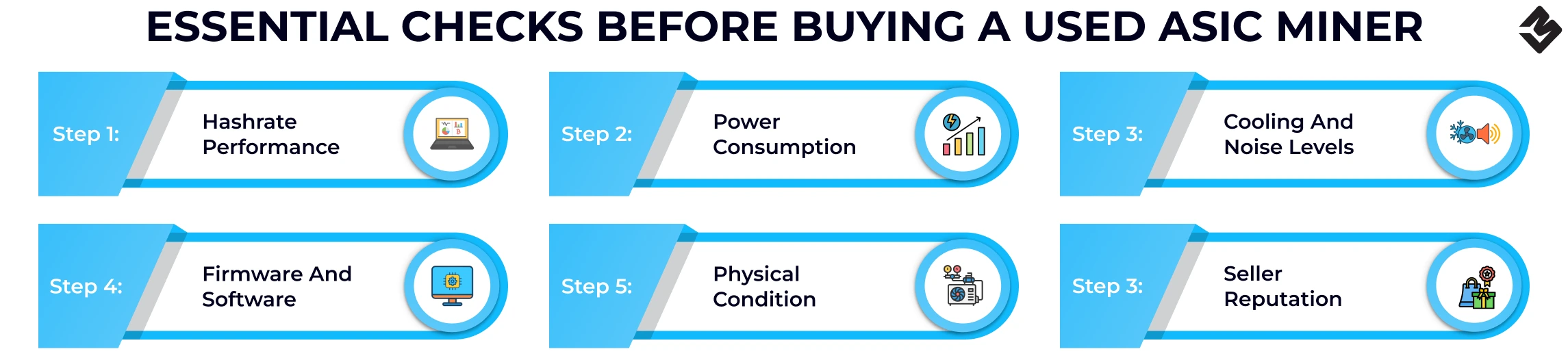
1. Hashrate Performance
The hashrate is the “speed” of the miner. One properly maintained machine should almost always deliver the hashrate that it was initially rated for. If the hashrate is significantly lower, it could be caused by damaged chips or neglected maintenance.
Hint: Request the seller to provide a picture of the miner’s dashboard where the current hashrate and uptime are indicated.
2. Power Consumption
Efficiency is everything in mining. A used miner may consume more power than it should if parts are worn out.
Tip: Check the specified power consumption of the machine against what it is actually consuming. When the power consumption of a device is higher than usual, it is a sign of something bad going on inside.
3. Cooling and Noise Levels
Fans and air-conditioning units undergo a lot of stress in secondhand machines. Invisible deposits in the fans or blocked vents are the primary sources of overheating. Overheated miners not only slow down but also wear out faster.
Hint: Unusual sounds can be a warning sign and fans should be checked for the presence of dust, rust, or damage.
4. Firmware and Software
Some sellers install custom firmware to boost performance, but this can stress the hardware or void the warranty. Outdated firmware can also cause stability issues.
Tip: Make sure the machine is running stably, with factory-recommended firmware, or plan to reset it after purchase.
5. Physical Condition
If you see that a product has been physically damaged from the outside, has corrosion, or has missing parts, it could mean that the item has been poorly handled or has been exposed to extreme conditions. Equipment that has been used in dusty, damp, or hot places, such as mining tools, will, in most cases, have a short life span.
Recommendation: Have a look at the outer casing, the ports, and the connectors. Try not to take on a machine where there are visible signs of rust or water.
6. Seller Reputation
Even if the machine looks fine, the seller matters. Unverified sellers may hide problems or refuse returns.
Tip: Always buy from trusted marketplaces, resellers, or mining communities with positive reviews.
You reduce the risk of buying a bad unit by checking hashrate, power use, cooling, software, physical condition, and seller reputation. These simple steps can save you hundreds – or even thousands – of dollars in future repairs.
Trusted Places to Buy New and Used ASIC Miners
Where you buy your ASIC miner is just as important as which model you choose. A reliable seller reduces the risk of scams, fake products, or faulty hardware. Here are some trusted options to consider when buying new or used miners.
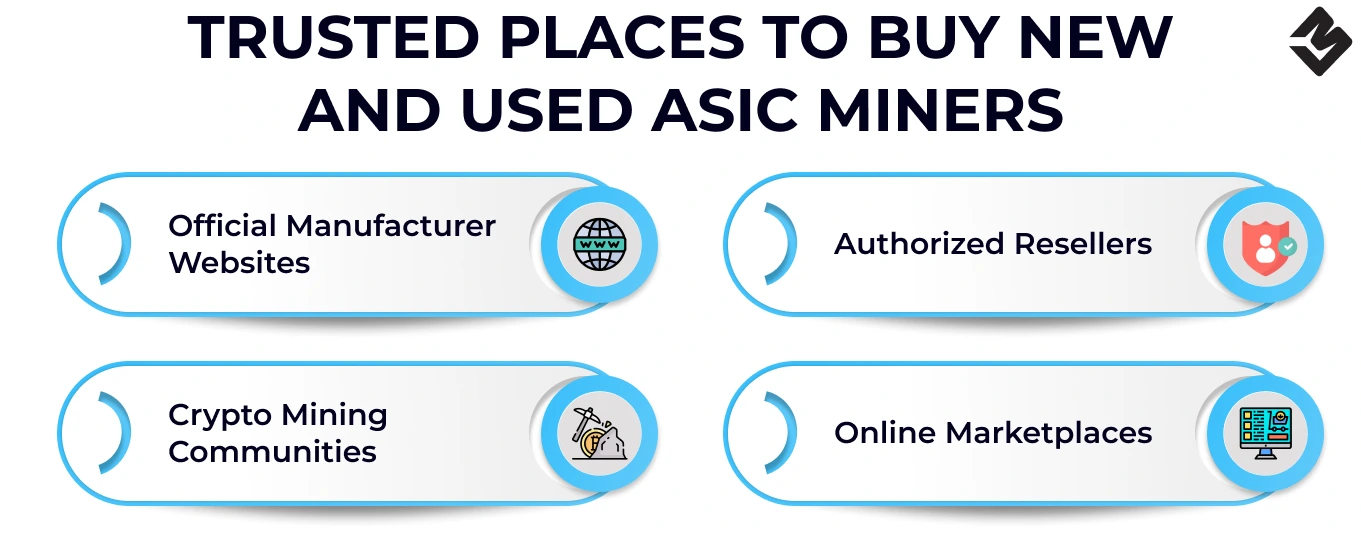
Official Manufacturer Websites
If you want a new machine, buying directly from the manufacturer is the safest option. Companies like Bitmain (Antminer), MicroBT (Whatsminer), PROMININGMACHINES and Canaan (AvalonMiner) sell miners on their official websites. The benefits include genuine products, warranty coverage, and access to the latest models. The downside is high demand – sometimes you must pre-order and wait weeks or months.
Authorized Resellers
Many manufacturers have authorized partners who sell their miners. Buying from these resellers gives you the same security as buying directly, but often with faster delivery. Resellers may also offer bulk discounts or package deals, including power supplies and accessories.
Online Marketplaces
eBay, Amazon, or Alibaba are some of the websites where you can find listings of both new and used ASIC miners. Although these platforms provide extensive selections, they still bear certain challenges. There are sellers who can deliver defective or counterfeit machines.
Crypto Mining Communities
Communities and forums such as Bitcointalk, Telegram groups, or local mining clubs can be good places to find used miners at fair prices. Many miners sell their older models when upgrading to new ones. Deals here are often cheaper than marketplaces, but you must carefully verify the seller’s reputation.CONCLUSION
Choosing between new and used ASIC miners is not always simple – it depends on your budget, goals, and mining strategy. New ASICs are attractive because they deliver the latest technology, higher efficiency, and lower chances of breakdowns. On the other hand, used miners can be a wise choice if you want to start mining at a lower cost or test the waters without making a significant investment.
The key is to balance cost and long-term profitability. For example, if electricity in your area is expensive, a new miner with better energy efficiency may save you more money in the long run. On the other hand, if the cost of your electricity is low and the power supply is stable, then a good secondhand mining machine will probably give you good returns.
Always consider the reputation of the seller, check for warranty options, and compare performance with other similar products before you make a purchase. Keep in mind that cryptocurrency mining is not only about hardware acquisition; it is also about cost control, staying on top of the crypto trends, and thinking in the long run.
It doesn’t really matter whether you decide to buy a new or a secondhand ASIC, as long as the right choice is the one that fits your budget and mining goals. Mining can become a profitable and sustainable activity if you plan it well.FAQs ON NEW VS USED ASIC MINERS
- Is it better to buy a new or used ASIC miner?
It depends on your budget and goals. New miners are more efficient, while used ones are cheaper but may need more maintenance.
- How long does an ASIC miner usually last?
On average, ASIC miners can last 3–5 years. Proper cooling, maintenance, and power management can extend their lifespan.
- Are used ASIC miners risky to buy?
They can be bought from unreliable sellers. Always check the machine’s condition, hashrate performance, and warranty if available.
- Do new ASIC miners save more electricity?
Yes, most new models are designed for higher efficiency. This can significantly reduce electricity costs and improve profits over time.
- Can I resell my ASIC miner later?
Yes, ASIC miners hold resale value, especially if they’re still efficient. Newer models generally have better resale potential than older ones.